18 October 2026
Around Mount Dora: A Simple Seasonal Checklist for Gutters and Downspouts
Presented by @drainagejournal299
Around Mount Dora, the weather does not leave gutters alone for long. Summer thunderstorms hit hard, tropical systems can dump a lot of water in a short window, and the humidity seems to turn every forgotten corner of a house into a maintenance reminder. Gutters and downspouts sit right in the middle of that reality. When they are moving water where it should go, most people barely notice them. When they are clogged, loose, or sending runoff to the wrong spot, the problems show up fast.
In this part of Florida, roof drainage is not just about keeping water off your head at the front door. It is about protecting the soil around the house, limiting erosion, keeping water from pooling near the foundation, and helping the yard absorb runoff instead of watching it race across hard surfaces. Florida-friendly guidance has stressed for years that roof runoff should stay on site when possible and be directed into areas that can absorb it, such as turf, planting beds, rain gardens, rain barrels, cisterns, and other pervious spaces. That is the big picture. The seasonal checklist simply makes that goal easier to manage.
What follows is a practical, low-drama approach to the year. No complicated schedule, no gimmicks, and no pretending every house around Lake County drains the same way.
Why gutters matter more here than people think
A lot of homeowners only think about gutters when they overflow. That misses the quieter problems. Water dropping straight off a roof edge can beat up mulch, carve channels through sandy soil, splash dirt onto siding, and leave soggy areas near the base of the house. Guidance for Florida landscapes is clear on the main point: send water away from the structure and into places that can take it in.
That matters in neighborhoods where lawns, planting beds, lanais, and pool decks all meet each other in tight spaces. It also matters on homes where one bad downspout location sends runoff into a walkway or toward a low spot that never quite dries out. Pool-adjacent homes feel this quickly. If you have ever stepped onto a patio after a storm and found muddy washout near a screen enclosure or water tracking across outdoor living space, you already understand why gutter drainage for pool cages becomes a real conversation, not a niche one.
The work is not glamorous, but it is predictable. Gutters collect debris. Downspouts get blocked. Connections loosen. Water follows the easiest path, even when that path is not the one you intended.
The Florida pattern to plan around
Around Mount Dora, it helps to stop thinking in four neat calendar seasons and think instead in weather phases. There is the drier stretch when debris can sit unnoticed. Then there is the stormy stretch when every weak point gets tested at once. Add in leaf litter, seed pods, and the general mess that trees and roofs create together, and your system needs periodic checks even if nothing looks wrong from the driveway.
That is why a year-round gutter checklist Florida homeowners can actually follow should be simple. The goal is not perfection. The goal is catching small issues before a heavy rain turns them into runoff, erosion, and cleanup.
A simple seasonal checklist that works
Use this as a rhythm, not a rigid rulebook. If you have more trees over the roofline, you may check more often. If your lot drains beautifully and the gutters stay clear, you may need less attention. What matters is consistency.
- At the start of the wetter season, look for obvious blockages in gutters and downspouts, and confirm that water will discharge into lawn, beds, or another area that can absorb it.
- After the first few heavy storms, walk the perimeter and look for overflow marks, washed-out mulch, pooling near the foundation, or spots where runoff is cutting channels through soil.
- Mid-season, check that downspouts still aim away from the house and have not shifted toward walkways, screen enclosures, or low areas that stay soggy.
- Late in the storm season, clear out leaf litter and debris again so the system is not carrying old buildup into the next round of rain.
- During the drier part of the year, take a calmer inspection pass for loose sections, aging seal points, and drainage patterns in the yard that need improvement before the rains return.
That is the whole framework. If you do nothing else, those five check-ins will put you ahead of most gutter problems.
What to watch for during each walkaround
Start at the corners. Corners often tell the truth first because water slows there and debris likes to settle. Then check the spots below valleys in the roof, where water tends to concentrate. If you see staining on fascia, damp soil packed hard beneath an edge, or mulch pushed out of place, that usually means the system is not keeping up or the outlet point is wrong.
Walk to each https://drainageguide423.nexorafield.com/posts/hiring-a-gutter-contractor-in-florida-questions-homeowners-in-leesburg-should-ask-2 downspout discharge and ask one plain question: when rain comes off the roof, can this area actually absorb it? Florida-friendly landscape guidance encourages keeping water on site, but “on site” should not mean “at the foot of the wall.” Turf and planted beds can work well. So can a rain garden, a rain barrel, or another pervious zone. The key is distance and absorption. Water that empties next to the foundation can create pooling and can also contribute to pest issues. If one downspout always creates a swampy patch, the answer is not just cleaning. The answer may be rethinking where that runoff lands.
On pool homes, pay extra attention to the edges where decking, planting beds, and cage lines meet. Roof water that rushes into those transitions can make a mess quickly. Even when the volume is not huge, repeated overflow in the same place can erode soil and create dirty splashback around outdoor living areas.
The cleaning question every homeowner asks
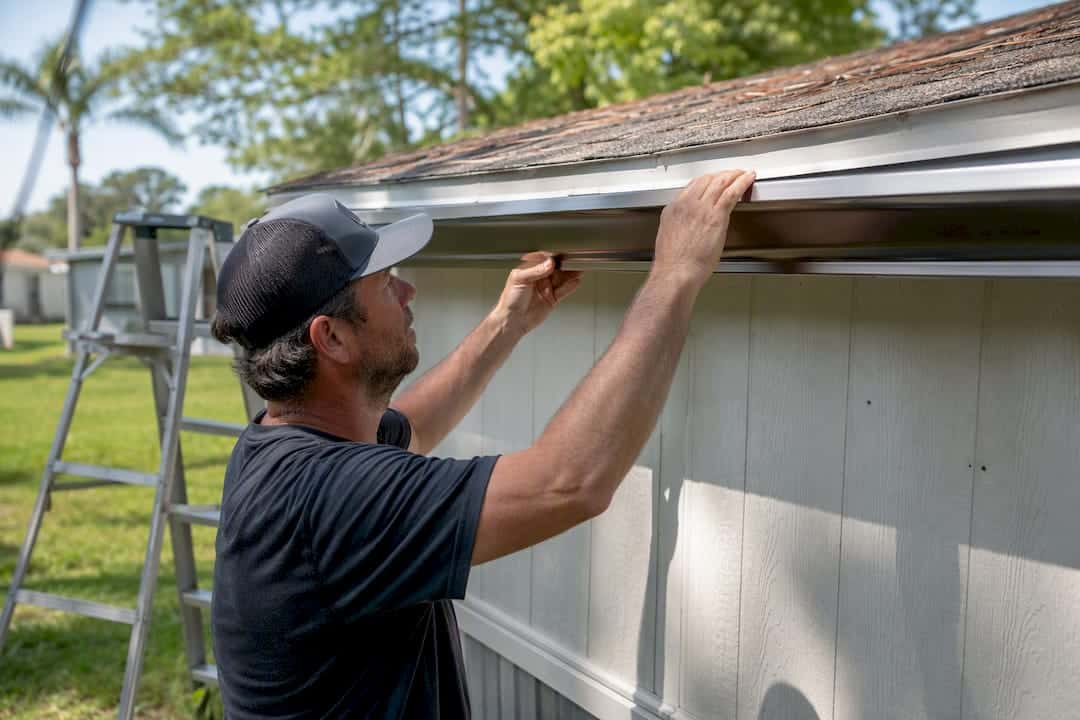
Sooner or later, every homeowner lands on the same search phrase: DIY gutter cleaning or hire a pro. There is no one-size-fits-all answer, and experience matters more than pride here.
If the home is low, access is straightforward, and you are comfortable working safely, a basic visual inspection and light debris removal may be reasonable. But the second the roofline becomes awkward, the ground uneven, or the debris packed down and wet, the calculation changes. A lot of people think the hard part is scooping leaves. Often the real challenge is seeing whether the system is draining correctly afterward and whether a clog is sitting deeper in the downspout.
Another point gets overlooked. Cleaning and diagnosis are not the same thing. Someone can remove debris and still miss that a downspout empties into the wrong place, or that a section is pitched in a way that holds water. If you have recurring overflow in the same area, especially after cleaning, that is usually a sign to step back and assess the drainage pattern, not just repeat the cleanup.
When it makes sense to call a professional
There is a difference between routine upkeep and problem solving. In my experience, homeowners save time and frustration when they call for help before a small drainage issue starts affecting the yard or foundation area.
- Water pools near the house after rain, even when the gutters appear clear.
- Overflow keeps happening at the same section after more than one cleaning.
- A downspout discharges into a problem area near a patio, pool cage, or walkway.
- Sections look loose, misaligned, or visibly separated.
- You cannot inspect or clean the system safely from the ground or a stable ladder setup.
That kind of judgment call applies whether someone is searching for gutter cleaning Dunnellon FL, gutter repair Hawthorne FL, or a local company closer to Mount Dora. The zip code matters less than the problem. What you want is someone who can look at runoff behavior, not just remove debris and leave.
A few Florida gutter myths worth dropping
There are plenty of gutter myths Florida homeowners hear from neighbors, online forums, or well-meaning relatives. One common idea is that if your yard is sandy, water will always soak in fast enough. Sometimes it does. Sometimes a hard summer storm overwhelms the surface before the ground can absorb it, especially where runoff is concentrated in one spot. Another myth is that if a gutter is attached and not visibly leaking, it is fine. In reality, poor discharge location can cause trouble even when the metal itself looks okay.
I also hear people assume that if they add any type of guard, maintenance disappears. That is not how real homes work. Debris management may improve, but inspection still matters. Gutter guards Mount Dora FL is a phrase people search for because guards can help in the right setting, yet they do not replace watching how the system performs during actual storms.
The last myth is cosmetic: that gutter color is a tiny, unimportant detail. It can be a small thing aesthetically, but in neighborhoods with HOA or ARC review, exterior appearance can become part of the decision. Florida law gives associations authority over exterior appearance standards, including color and style specifications for hurricane protection products, though those standards still have to comply with code and cannot be used to deny conforming installations. If you are choosing gutter colors for Florida homes in a community with design review, it is smart to check requirements early rather than repaint or reorder later.
If you are thinking about replacement instead of maintenance
Some homes reach the point where seasonal cleaning is not the full answer. Maybe the layout is wrong. Maybe water is not being controlled well at key corners. Maybe the existing system is aging and patchwork repairs are stacking up. That is where homeowners start comparing materials, profiles, and local contractors.
People often ask about seamless gutters Williston FL or similar location-based services because seamless systems are commonly discussed when replacement comes up. The general appeal is simple: fewer joints can mean fewer places for leaks and buildup issues to start. But even then, layout and discharge matter every bit as much as construction style. A beautiful new run of gutter will still disappoint if a downspout empties into a spot that cannot absorb water.
Questions about gutter installation cost factors Florida also come up early in the process. Cost depends on the house and the drainage plan, and broad promises are not very useful. The defensible way to think about it is this: pricing changes with the size and shape of the roofline, the number of corners and downspouts, access, and how much work is needed to move runoff to better areas on the property. Material choice and appearance also play a role. If a bid seems low but ignores where the water will go after it leaves the downspout, it may not be solving the real problem.
Special note for metal roofs
Homeowners with metal roofing often ask whether standard gutter advice still applies. The search phrase gutters for metal roofs Florida pops up for a reason. The roof surface may differ, but the key Florida concerns remain the same: handling strong rain, keeping runoff away from the foundation area, and directing it into spots that can absorb it. Because water behavior can feel more concentrated on some roof designs, it is worth paying close attention during the first major storms after installation or replacement. Watching actual runoff tells you more than a sales brochure ever will.
Make the landscape part of the plan
One of the better habits I see in Florida yards is treating downspouts and landscape drainage as one system rather than two unrelated chores. UF/IFAS guidance supports keeping stormwater on site when possible, and that idea works best when the yard is ready for it. A planted bed can absorb runoff well if it is shaped sensibly and not already saturated. Turf can help if it is not compacted into a runoff lane. A rain garden can be useful in the right setting. Rain barrels and cisterns can also be part of the mix where practical.
The point is not to force every home into the same design. The point is to stop letting downspouts dump water into the first bare patch of ground available. Small adjustments in where water lands can reduce erosion, keep mulch in place, and make the whole property easier to maintain.
I have seen homeowners spend plenty on splash blocks, extra edging, and repeated mulch replacement when the simpler fix was redirecting runoff into a better part of the yard. The cheapest repair is often the one that keeps the same damage from happening again.
How to tell if your checklist is working
The best sign is boring rain. Water goes through the system, the yard handles the discharge, and nothing dramatic happens. You should not see fresh washout after normal storms. You should not have standing water hugging the house. You should not find dirt splashed all over walls beneath roof edges. And you should not be surprised by the same overflow point every season.
If you want one practical habit that beats almost any product upgrade, do this: after a strong rain, walk the property. Not days later, when everything has dried and settled. Right after. That is when the truth shows up. You can see where the water is leaving the roof, where it is landing, and whether the receiving area is coping well. A five-minute walk in damp shoes teaches more than guessing from inside the window.
Keep it simple, keep it regular
Around Mount Dora, gutter care does not need to become a hobby. It just needs a little attention at the right times of year. Clear debris before it turns into blockage. Make sure downspouts send water away from the house. Aim that runoff toward places that can absorb it. Watch especially closely near patios, pool areas, and any low spot that tends to stay wet.
That approach is simple, but it lines up with what Florida homes actually need. Strong storms will keep coming. Humidity will keep exposing neglected maintenance. The houses that handle it best are usually not the ones with the fanciest add-ons. They are the ones where someone pays attention, season after season, and makes sure water goes where it belongs.